

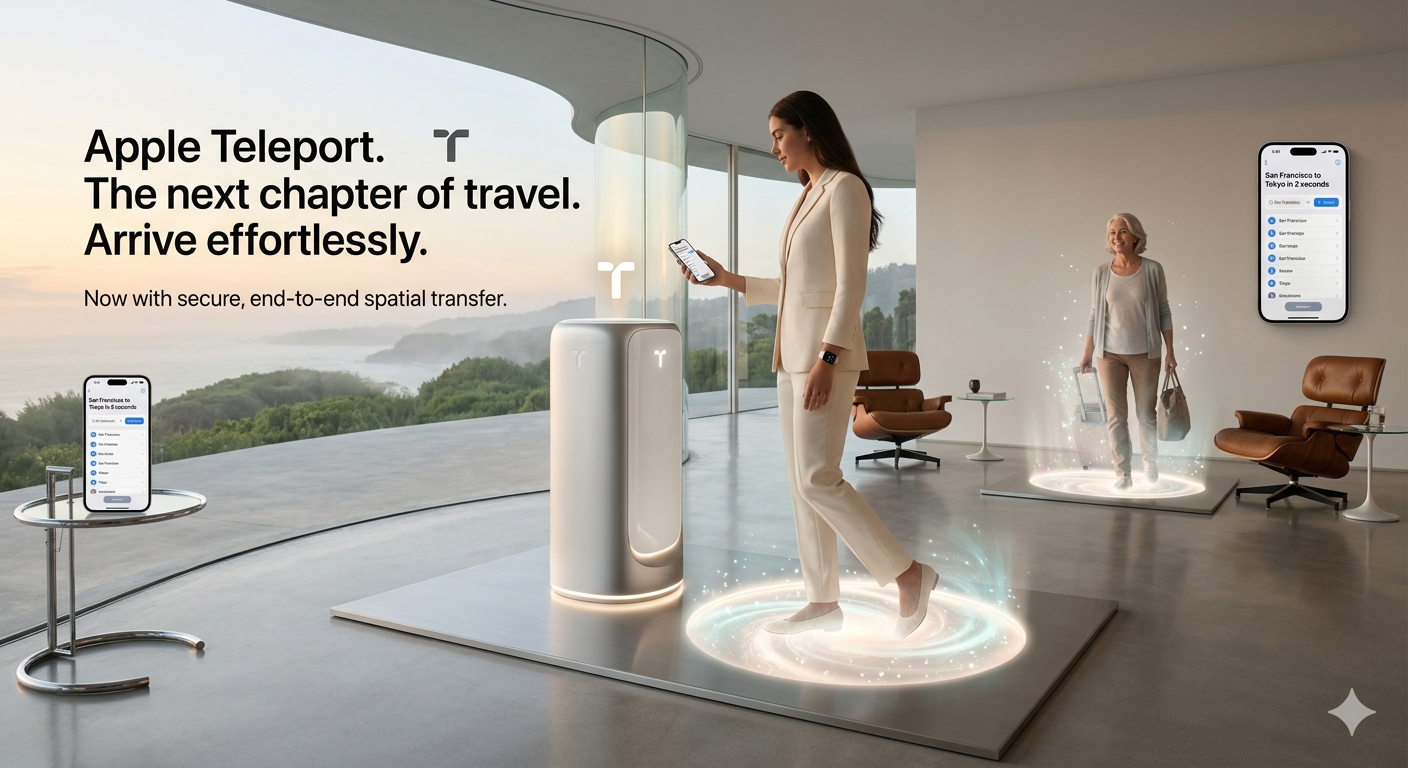
In recent months, the phrase Apple Teleport has spread like wildfire across social media, tech blogs, and speculative forums. To many, it sounds like the next big leap in consumer technology — a device that would make science fiction real, instantly transporting people or objects from one location to another, defying distance itself. But is Apple’s teleportation system actually real? Or is it just another tech rumor caught up in hype and imagination?
In this comprehensive article, we’ll dive into the origins of the Apple Teleport idea, separate fact from fiction, examine the technology that does exist today, and explore what teleportation means in real scientific terms.
What Do People Mean by “Apple Teleport”?
At its core, Apple Teleport refers to a futuristic concept — a device or technology attributed to Apple Inc. that could transport people, devices, or objects instantly across space. Some online posts even attach price tags or fabricated product launches to the idea.
But here’s the first important point: Apple has never announced an official product called Apple Teleport. There is no product page, no press release, no patent filing under that name — nothing that would indicate this is a real upcoming Apple product.
So why is the term “Apple Teleport” trending? It’s partly due to human fascination with sci-fi tech, partly due to Apple’s reputation as an innovation leader, and partly due to the power of viral content. People see compelling visuals or imagined product renders, and they want to believe it could be real. And when Apple is mentioned — a company known for pushing boundaries — all the more so.
Separating Rumors from Reality
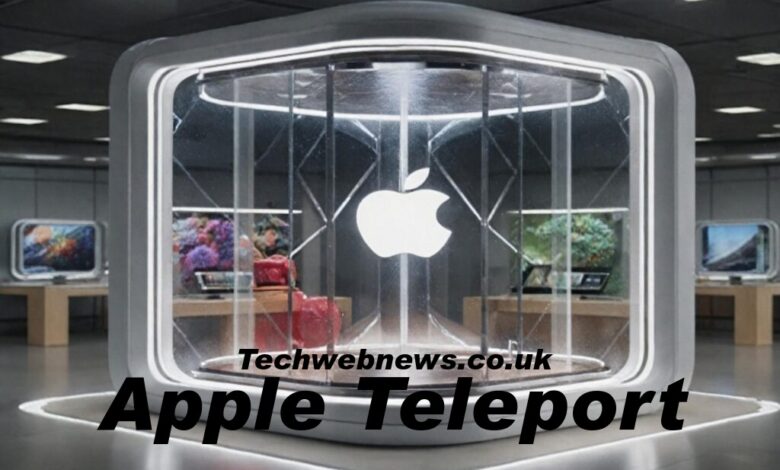
Apple Teleport Let’s set the record straight: Apple does not have a teleportation machine, and no such technology is publicly in development.
Here’s why:
1. No Official Apple Announcement
Despite intense social media activity, Apple has not made any official statement about teleportation technology. Companies like Apple regularly file patents, host keynote events, and publish press releases for even early-stage technologies — but there’s no record of teleportation being part of any such announcements.
2. Source of Rumors Is Speculative Content
Most of the online Apple Teleport material comes from blog posts, AI-generated images or videos, or discussions on social media. These visuals may look “real,” but sophisticated AI can now produce highly convincing renders of products that don’t exist.
3. Current Teleportation Science Is Not About Moving Matter
Real teleportation in physics — known as quantum teleportation — only involves the transfer of information about the state of a particle, not the particle itself. Scientists can transfer quantum states between particles, but they cannot teleport physical objects or living beings. This is a fundamentally different phenomenon from the sci-fi teleportation many imagine.
So while the dream of instant physical transport captures the imagination, the current state of science simply doesn’t support it yet.
Is There Any Real Tech Related to “Teleportation”?
While Apple Teleport itself isn’t real, the idea taps into real technological trends — especially in spatial computing and virtual presence. Apple’s actual innovations in this arena are very exciting, and in some ways parallel the feel of teleportation in a digital sense.
1. Spatial Computing and Mixed Reality
Apple has made significant strides in spatial computing — a combination of augmented reality (AR), virtual reality (VR), and mixed reality technologies. Products like the Apple Vision Pro headset blend digital environments with the physical world to create immersive experiences.
With spatial computing, you can feel like you’re “present” somewhere else — interacting with people or places digitally. While this isn’t physical teleportation, it does allow users to feel like they’re in a different environment instantly.
2. Virtual Presence and Telepresence Technologies
Telepresence refers to technologies that let you feel present in another location, often through high-resolution video, sensors, and interactive environments. Imagine attending a convention in Tokyo from your living room with lifelike visuals and sound — that’s telepresence, and it’s already here in many forms.
Apple’s ecosystem — with powerful chips, advanced sensors, and a tightly integrated hardware-software environment — is well-positioned to make such experiences more seamless and natural.
3. Enhanced Connectivity and Real-Time Interaction
Future technologies involving ultra-low latency networking and volumetric capture could make remote participants seem vividly present in real time. This sort of advanced telepresence blurs the lines between digital and physical experiences — and that might be the closest practical meaning of “teleportation” for the next decade.
So while Apple isn’t building a transporter pad from science fiction, it is working on technologies that redefine how we experience presence and interaction across distances.
What Teleportation Means in Science and Fiction
To understand why Apple Teleport seems so captivating, it’s useful to explore how people think about teleportation both scientifically and culturally.
1. Teleportation in Science Fiction
In books, movies, and TV shows — from Star Trek to modern fantasy — teleportation is a staple: characters vanish from one place and appear in another instantly. That image is so strong that when you hear “teleportation,” it almost has to be physical transportation of matter.
But that’s fiction, not physics.
2. Quantum Teleportation in Reality
In real science, teleportation refers to transferring the state of a particle using quantum entanglement. This doesn’t move the particle itself — it moves information. And this process currently only works for very small particles under controlled conditions.
Applying quantum teleportation to large objects, let alone humans, faces staggering technical barriers that are far beyond today’s engineering capabilities.
The result? The kind of teleportation people imagine — the instantaneous movement of people or objects — remains in the realm of science fiction for now.
Why the Rumor Spread So Widely
Even though Apple Teleport is fictional, the conversation around it says a lot about how technology narratives spread today.
1. Apple’s Reputation Amplifies Imagination
Apple is a company that often surprises the world with new forms of tech — from the iPhone to AR experiences. So when someone suggests Apple might be working on teleportation, it doesn’t seem entirely implausible to fans and followers.
Rumors exploit this goodwill to spread quickly.
2. AI Makes Fiction Look Real
Modern AI can create images, mock videos, and compelling product ads that look remarkably real. Combine this with social sharing, and a rumor can seem like breaking news even when it’s entirely fabricated.
3. Our Fascination with the Future
People love thinking about what’s next — especially technologies that reshape how we live. Teleportation, instantaneous travel, and futuristic transport are dreams people share across generations. Apple’s brand makes those dreams feel closer.
That’s why a term like Apple Teleport can take off, even without any factual basis.
Conclusion: What Apple Teleport Really Represents
So what’s the honest takeaway?
👉 Apple Teleport is not a real product or technology under development by Apple.
There is no teleportation machine capable of instant matter transport, no official announcement, no prototype, and no confirmed roadmap for such a device.
But that doesn’t mean the conversation is pointless. Apple Teleport has become a symbol — a shorthand for what people wish technology could do. It reflects:
- Our longing for breakthrough innovation
- The seductive power of futuristic imagination
- The influence of Apple’s brand and reputation
- How AI can make unreal ideas seem real
In a very real way, the Apple Teleport narrative tells us more about our hopes for the future than it does about Apple’s actual product strategy.
And while physical teleportation may stay fiction for a long time, Apple’s work in spatial computing, mixed reality, and immersive tech will continue to transform how we perceive presence, interaction, and connection in the digital age.
Now that’s a kind of teleportation we can almost touch — even if it’s not a transporter pad.

