
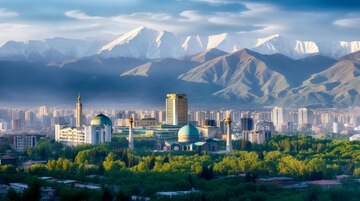
The phrase “Panorama of World Alaikas” may sound unusual at first, but that’s exactly what makes it fascinating. It suggests a wide, immersive view of something vast, layered, and deeply interconnected. Rather than pointing to a single place or idea, World Alaikas represents a collective panorama—an evolving blend of geography, culture, heritage, and human experience across the globe.
In today’s interconnected world, concepts like World Alaikas help us step back and see the bigger picture. They invite us to observe how different regions, traditions, and environments coexist, influence one another, and form a living global mosaic. This article explores that panorama from multiple angles, blending cultural insight, environmental awareness, and modern relevance.
What follows is not a dry academic breakdown, but a guided tour—written by someone who understands the depth of global systems yet enjoys explaining them in a grounded, human way. Let’s zoom out and take in the full panorama.
Understanding the Concept of World Alaikas
At its core, the idea of World Alaikas represents a panoramic perspective of the world’s diverse identities. It is less about borders on a map and more about how different civilizations, ecosystems, and philosophies exist side by side. Think of it as standing on a high vantage point, seeing countless stories unfolding at once, each shaped by its own history and environment.
The term “panorama” is essential here. It implies continuity, not isolation. World Alaikas acknowledges that no culture or region develops in a vacuum. Trade routes, migration, climate patterns, and shared challenges have always linked societies together. From ancient maritime exchanges to modern digital connections, the panorama has only become wider and more complex.
Experts often approach World Alaikas as a framework rather than a fixed definition. It allows historians, geographers, and cultural analysts to discuss global diversity without reducing it to stereotypes. Instead of asking, “What makes us different?” the concept asks, “How do these differences coexist within the same global picture?” That shift in perspective is what gives World Alaikas its real depth.
Cultural Diversity Within the Panorama of World Alaikas
One of the most striking aspects of the Panorama of World Alaikas is cultural diversity. Languages, rituals, art forms, and social norms vary dramatically from one region to another, yet all contribute to a shared human story. This diversity isn’t chaotic—it’s structured by history, environment, and collective memory.
Take traditional music, for example. Whether it’s rhythmic drumming in Africa, classical ragas in South Asia, or folk ballads in Eastern Europe, each tradition reflects the emotional and historical landscape of its people. Within World Alaikas, these expressions are not ranked or compared; they are viewed as parallel contributions to a global cultural soundtrack.
What experts appreciate most is how cultures adapt while maintaining identity. Globalization hasn’t erased local traditions—it has challenged them to evolve. World Alaikas highlights this balance between preservation and transformation. Cultural exchange, when viewed through this panoramic lens, becomes less about loss and more about dialogue.
Geographical and Environmental Layers of World Alaikas
Geography plays a foundational role in shaping the Panorama of World Alaikas. Mountains, oceans, deserts, and forests are not just physical features; they influence lifestyles, economies, and belief systems. Human societies have always adapted to their surroundings, and those adaptations are visible across the global panorama.
Environmental diversity also brings shared responsibility. Climate change, deforestation, and biodiversity loss do not respect national borders. From melting ice regions to rising sea levels in coastal zones, the environmental layer of World Alaikas reminds us that local actions can have global consequences. This interconnectedness is impossible to ignore when viewing the world panoramically.
Experts increasingly use the World Alaikas perspective in environmental studies because it encourages long-term thinking. Instead of focusing on isolated solutions, it promotes systems-based approaches. Understanding how ecosystems interact across continents helps policymakers and scientists craft strategies that are both effective and sustainable.
Historical Evolution of the World Alaikas Perspective
The Panorama of World Alaikas did not emerge overnight. Historically, humans viewed the world in fragments—tribes, kingdoms, empires. Over time, exploration, trade, and communication expanded those horizons. What once felt like separate worlds gradually merged into a shared global awareness.
The Age of Exploration dramatically widened this panorama, for better and worse. While it connected continents, it also introduced conflict and exploitation. A modern understanding of World Alaikas doesn’t ignore these darker chapters; instead, it integrates them to provide a more honest, nuanced picture of how the world came to be interconnected.
Today, digital technology has accelerated this evolution. Information travels instantly, cultures interact daily, and global events are experienced collectively. Experts argue that this real-time connectivity makes the Panorama of World Alaikas more visible than ever before. We are no longer observers—we are participants within the panorama.
Modern Relevance and Future of World Alaikas
In the modern era, the relevance of World Alaikas is undeniable. Global challenges such as pandemics, economic instability, and climate crises require cooperative thinking. Viewing the world through a panoramic lens helps leaders and communities move beyond short-term, local fixes toward collaborative solutions.
Education is one area where this concept is gaining traction. Teaching students to understand global interdependence prepares them for a world where cross-cultural competence is essential. World Alaikas encourages curiosity rather than fear, understanding rather than division. That mindset is invaluable in an increasingly complex global society.
Looking ahead, the future of World Alaikas depends on how consciously we engage with it. The panorama will continue to expand, shaped by technology, migration, and environmental change. Experts agree that embracing this perspective—rather than resisting it—offers the best chance for a more balanced, empathetic, and sustainable world.
Final Thoughts
The Panorama of World Alaikas is not just a concept—it’s a way of seeing. It challenges us to step back, widen our view, and recognize the intricate connections that bind humanity together. From culture and geography to history and modern innovation, every element plays a role in shaping the global picture.
By approaching the world panoramically, we gain more than knowledge—we gain perspective. And in a world that often feels divided, that broader view might be one of the most valuable tools we have.
