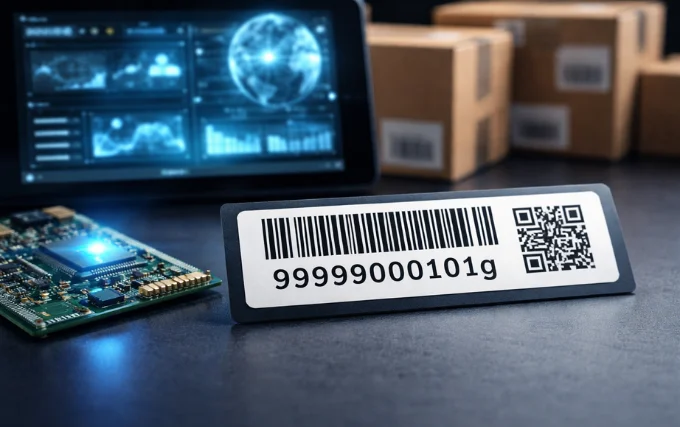
In the digital age, even the smallest string of characters can carry a surprising amount of meaning. At first glance, the keyword “99999000101g” looks like a random mix of numbers and a single letter, something you might dismiss as a typo or a temporary placeholder. In reality, codes like this often sit quietly at the heart of complex systems, helping software, databases, and organizations keep track of information with precision.
What makes an identifier interesting is not how it looks, but how it behaves inside a system. “99999000101g” is a perfect example of a structured token that can represent a product, a transaction, a batch, or even an internal reference in a technical workflow. Experts recognize these patterns instantly because they reveal how modern data ecosystems are designed to scale.
In this article, we’ll explore what a code like 99999000101g can represent, how such identifiers are built, where they are used, and why they matter. Even if this exact string is unfamiliar, the principles behind it are essential for anyone working with data, software, logistics, or digital records.
What Is 99999000101g?

At its core, 99999000101g functions as an alphanumeric identifier. These identifiers are commonly used to label items, records, or processes in a way that machines can read reliably and humans can reference when needed. The long numeric prefix suggests sequencing or categorization, while the trailing “g” often signals a version, group, or classification tag.
From an expert perspective, identifiers like this are rarely accidental. Each digit usually has a job: some represent regions or systems, others encode time, batches, or internal counters. The final character may indicate a subtype or a checksum-style marker that helps detect errors when the code is transmitted between systems.
Although “99999000101g” may not correspond to a public standard, it fits neatly into the design logic used in inventory systems, billing platforms, laboratory tracking, and enterprise software. In those environments, a code’s uniqueness is more important than its readability, and this format delivers exactly that.
The Origins and Structure of 99999000101g
Understanding where a code comes from begins with understanding how organizations design numbering schemes. Typically, a long numeric string like “99999000101” is generated by an automated counter or by combining several smaller codes into one unified identifier. This allows millions of entries to be created without duplication.
The inclusion of a letter at the end, in this case “g,” often reflects an extension of an older system. Many legacy databases began with purely numeric IDs, then later added letters to increase capacity or introduce categories without breaking backward compatibility. This small design choice can extend the lifespan of a system by years.
Experts pay close attention to these patterns because they reveal the history of a platform. A mixed-format identifier suggests evolution, adaptation, and a need to remain flexible. In that sense, 99999000101g tells a story about how modern systems grow over time while still maintaining order.
Practical Uses in Real‑World Systems
In real-world applications, identifiers like 99999000101g appear everywhere. In supply chain management, such a code might label a shipment, a pallet, or a specific manufacturing batch. This allows every movement of the item to be tracked from factory to warehouse to customer.
In software development and IT operations, similar strings are used as primary keys in databases. They link user accounts to transactions, logs to sessions, and reports to their source data. Because machines process these codes faster and more reliably than descriptive names, performance and accuracy both improve.
Healthcare, finance, and research environments rely heavily on this approach as well. A lab sample, for example, might carry a code much like 99999000101g so it can be processed anonymously yet traced precisely. The result is a system that balances confidentiality, traceability, and efficiency.
Why 99999000101g Matters for Data Management
Good data management depends on stable, unique identifiers. Without them, records become tangled, duplicates appear, and errors spread quickly across systems. A code like 99999000101g acts as an anchor point, ensuring that every reference points to exactly the same object or event.
From an expert’s point of view, the real value lies in consistency. Once an identifier is assigned, it should never change. This permanence allows databases to be merged, archives to be searched, and audits to be performed with confidence. Even a simple-looking string becomes a cornerstone of reliability.
As data volumes continue to grow, structured identifiers also support automation and analytics. Software can sort, filter, and correlate millions of records in seconds when each one carries a predictable, well‑formed code. In this quiet way, identifiers power much of the modern digital economy.
Common Misunderstandings and Pitfalls
One common mistake is assuming that identifiers are meaningless. While they may not be designed for human storytelling, they usually encode logic that engineers and analysts depend on. Ignoring that structure can lead to misinterpretation, especially during system migrations or integrations.
Another pitfall is reusing or recycling identifiers too soon. When a code like 99999000101g is reassigned, old references may suddenly point to the wrong record. This can cause serious issues in billing, compliance, or safety‑critical environments. Best practice is to treat identifiers as permanent, even after the associated record is retired.
Finally, experts warn against embedding too much business logic directly into the code. While it’s tempting to encode dates, departments, or locations, overly complex identifiers become brittle. The most robust systems strike a balance between informative structure and long‑term simplicity.
The Future of Identifiers Like 99999000101g
Looking ahead, identifiers are becoming even more important as systems connect across organizations and borders. Cloud platforms, blockchain networks, and distributed databases all rely on unique tokens to coordinate activity without central control. Strings similar to 99999000101g will continue to evolve in length and complexity.
We are also seeing a shift toward globally unique identifiers and cryptographic hashes. These approaches reduce the risk of collisions and make it easier to merge data from different sources. Still, the basic principles remain the same: clarity, uniqueness, and stability.
In the end, codes like 99999000101g remind us that infrastructure often hides in plain sight. Behind every smooth digital experience lies a quiet web of identifiers keeping everything connected, accurate, and trustworthy.
Conclusion
Although 99999000101g may appear mysterious at first, it represents a familiar and essential concept in modern information systems. It shows how a carefully designed identifier can support tracking, automation, security, and long‑term data integrity.
By understanding how these codes are structured and used, professionals gain better insight into the systems they manage and the data they protect. What looks like a random string becomes a powerful tool once you recognize its role.
In a world driven by data, even a small code can carry enormous responsibility. And that is what makes identifiers like 99999000101g quietly fascinating.