

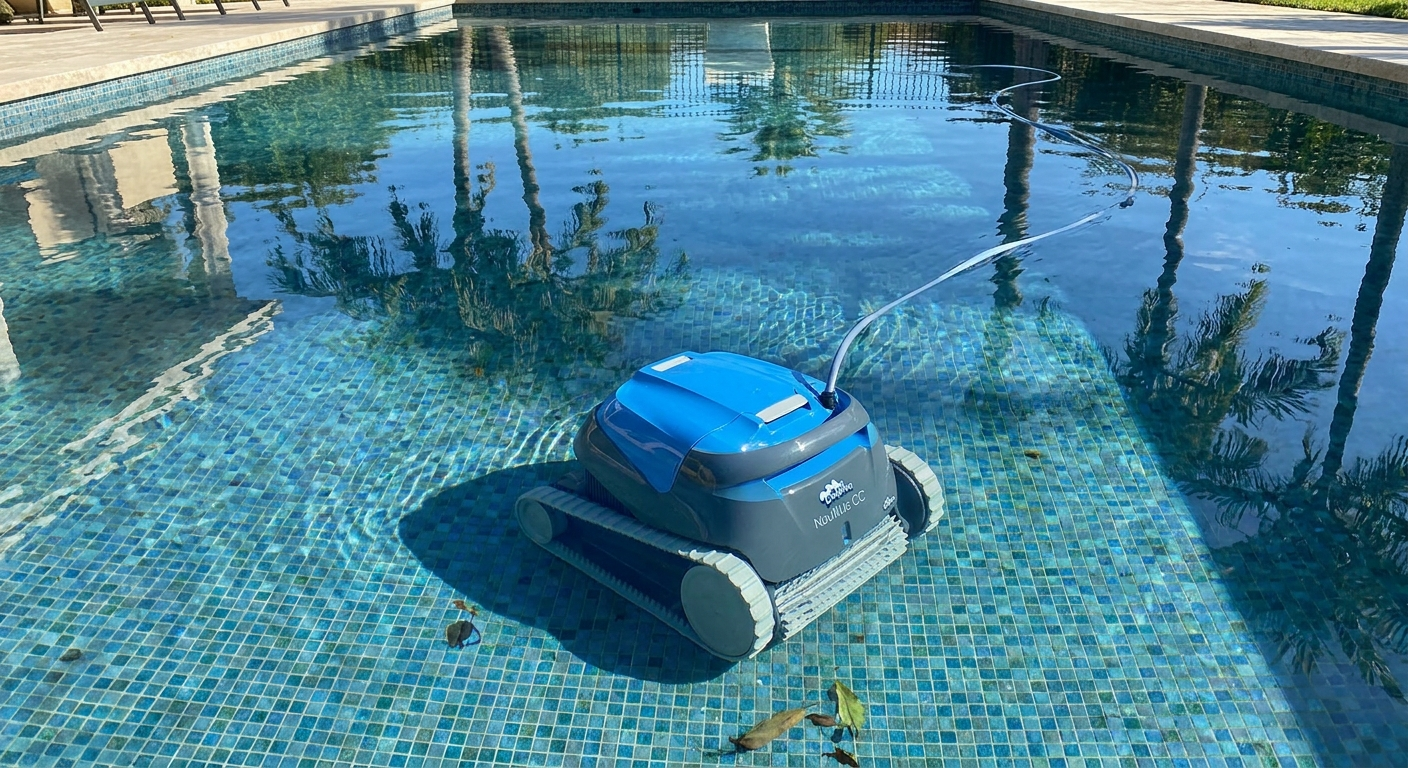
A clean, well-maintained pool does not stay balanced on its own.
Weather conditions such as heavy rain, extreme heat, and prolonged sunlight constantly work against your pool’s chemistry.
Rain dilutes sanitizers and lowers pH, while UV radiation destroys chlorine.
Understanding these effects helps you respond quickly and keep your water safe all season.
Why Weather Disrupts Pool Water Chemistry
Two primary weather factors disrupt pool chemistry: sunlight and rainwater.
Ultraviolet radiation from the sun breaks down free chlorine molecules.
On a hot, sunny day, a pool without adequate stabilizer can lose up to 90% of its chlorine within hours.
This leaves the water vulnerable to algae growth and bacterial contamination.
Rainwater introduces its own set of problems.
Rain is naturally acidic, with a pH around 5.6, far below the ideal pool range of 7.4 to 7.6. This acidity lowers pH and total alkalinity.
Rain also dilutes every chemical in the pool, weakening chlorine and making it harder for the water to resist algae.
Additionally, storms bring organic debris such as leaves, pollen, and dirt into the water. This material consumes chlorine and feeds algae. The combination of diluted chemicals and increased contaminants makes post-storm recovery a high priority for pool owners.
Restoring Balance After Heavy Rain
After a storm, test your pool water within 24 hours. Acting quickly prevents minor imbalances from turning into cloudy water or algae blooms. Follow these steps in order for effective recovery.
Step 1: Test and Adjust pH First
Start with pH. Low pH makes water corrosive and reduces chlorine efficiency.
Use a pH increaser to bring the level back to 7.4 to 7.6.
If pH continues to drift after correction, test total alkalinity.
Alkalinity acts as a buffer for pH and should be maintained between 80 and 120 ppm.
Correcting pH first allows other chemicals to work more effectively. Even high chlorine levels cannot sanitize properly if pH is outside the ideal range.
Step 2: Shock and Boost Chlorine Levels
Rain dilutes chlorine. After adjusting pH, add enough chlorine to bring free chlorine back to 1 to 3 ppm. A shock treatment helps break down contaminants introduced by the rain. Add shock in the evening so sunlight does not immediately degrade the treatment.
Run the pump continuously for several hours to distribute the chemical evenly. Retest the next day to confirm chlorine levels are holding.
Step 3: Remove Debris and Improve Circulation
Leaves and organic matter consume chlorine. Skim the surface and remove visible debris promptly. Vacuum the floor if sediment has settled.
Run the pool pump for 12 to 16 hours per day for two to three days after a storm. This extra circulation helps filter out fine particles and prevents dead spots where algae can take hold.
Managing Chlorine Loss in Hot Weather
High temperatures and intense sunlight create continuous chlorine demand. Cyanuric acid, or stabilizer, protects chlorine from UV breakdown. Maintain CYA levels between 30 and 50 ppm in outdoor pools. Without adequate stabilizer, chlorine burns off quickly, and the pool becomes harder to keep clear.
If CYA is too low, add stabilizer to raise the level. If CYA is too high, partial draining and refilling may be the only solution. High CYA levels reduce chlorine effectiveness even when test readings appear normal.
When water balance keeps shifting, iGarden’s pool chemistry resource can help make sense of how pH, alkalinity, chlorine, and other key levels work together.
Building a Consistent Testing Schedule
Regular testing helps you catch problems early. Test free chlorine and pH at least two to three times per week during swim season. Test total alkalinity weekly. Check cyanuric acid and calcium hardness monthly, or sooner after heavy rain or water replacement.
Take water samples correctly for accurate results. Collect the sample 12 to 18 inches below the surface, away from return jets and skimmers. Test the sample promptly and confirm unusual readings before making large chemical adjustments.
Make one adjustment at a time. After adding a chemical, let the water circulate fully before retesting. This prevents overcorrection and keeps chemistry stable over time.
Seasonal Adjustments for Long-Term Balance
Weather patterns change through the year, and your pool care routine should adapt. In spring, focus on opening procedures. Balance pH and alkalinity first, then shock the pool and run the filter continuously for at least 24 hours.
During summer, test chemistry more frequently. Heat and heavy swimmer load increase chlorine demand. Brush walls and vacuum weekly to prevent algae from establishing.
In fall, manage falling leaves by skimming daily. Reduce shock treatments as temperatures drop. Lower pH slightly for winter storage if you live in a cold climate. Consistent seasonal care prevents major imbalances and extends equipment life.
Conclusion
Weather will always challenge your pool’s chemistry.
Rain, heat, and sunlight all work against stable water balance.
By understanding how these factors affect your pool, you can take proactive steps rather than reacting to problems after they appear.
Consistent testing, prompt corrections, and a reliable maintenance routine keep your pool safe and clear throughout the year.

